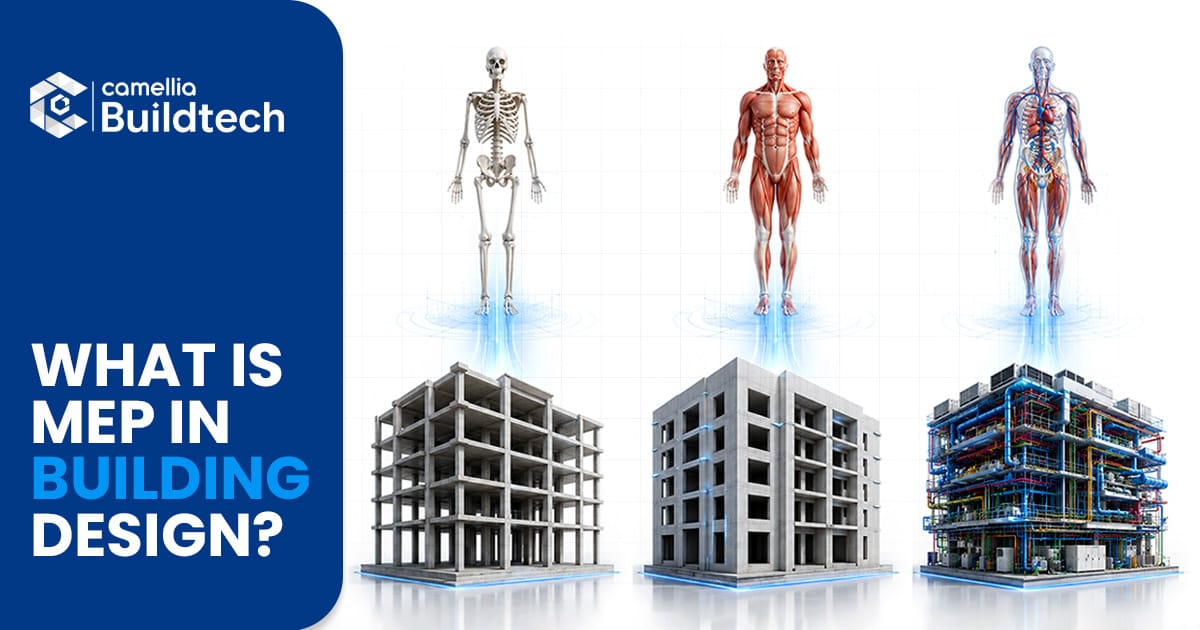

Upon entering a modern building, most individuals focus on aspects such as design, interior design, and lighting. However, many overlook the essential systems operating behind the scenes, which are fundamental to the building’s functionality. This is where MEP becomes significant.
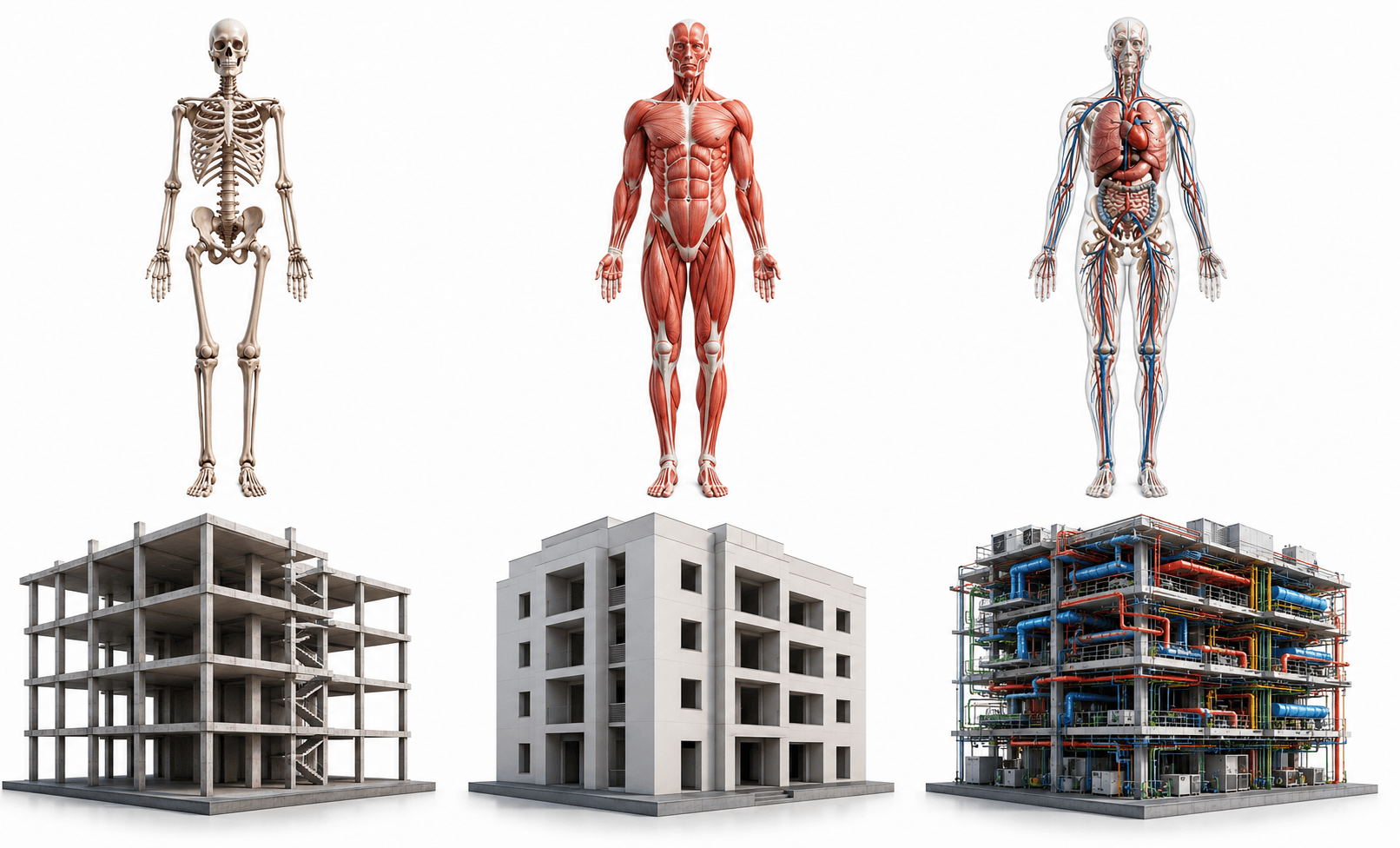
MEP is an acronym for Mechanical, Electrical, and Plumbing which ensures buildings remain comfortable and secure. These systems guarantee the smooth operation of residential, commercial, and industrial spaces, regardless of size or function.
Nowadays, MEP design isn’t just about basic plans. With advanced tech like BIM, 3D models, and clash detection, the process is much more precise. This lets engineers and builders fix issues before they start, saving time and cash.
Understanding Mechanical Systems in MEP
The mechanical part of MEP concentrates on HVAC systems— Heating, Ventilation, and Air Conditioning. These systems handle indoor temps, airflow, humidity, and overall coziness in buildings.
Mechanical stuff covers AC units, vent ducts, chillers, and exhaust systems. Their proper setup is super important since a bad design could waste energy and make folks uncomfortable.
Nowadays, lots of builders turn to HVAC and mechanical drafting services to plan these systems accurately before setting them up. The detailed planning aids in tweaking duct spots, preventing clashes, and boosting performance.
Using 3D HVAC modeling lets project teams see the full system before construction begins. Not only does this help everyone work better together, but it also stops costly changes on-site down the line.
Electrical Systems in Building Design
Electrical systems are a big part of MEP engineering, too. They distribute power around buildings for lighting, communication, security, and more.
Lighting plans, wiring, power distribution, electrical panels, backup systems, and data networks all get designed for electrical work. Because electrical stuff can overlap with mechanical and plumbing setups, the design phase needs careful coordination.
Nowadays, modern MEP BIM coordination lets engineers blend electrical systems with architectural and structural models. This leads to a smoother workflow and fewer issues when installing everything during construction.
Planning these electrical parts well is key to making buildings energy efficient and safe in the long run.
Plumbing Systems and Their Importance
Plumbing systems handle water supply, drainage, sewage, and piping within buildings. They’re essential for sanitation, water distribution, and general building functions.
These systems include freshwater lines, drainage pipes, stormwater setups, gas pipes, and sewage management. Planning has to be precise since minor errors could lead to big maintenance issues down the line.
Professionals offer drafting services to create clear, detailed piping plans for builders. Many large-scale projects now use piping CAD drafting and 3D models to make installations more accurate and to help with coordination among various building systems.
Solid MEP plumbing design means smoother water flow, better drainage, and overall better performance of the building over time.
Why MEP is Important in Modern Construction
MEP systems are commonly referred to as the building’s backbone since they are essential in creating a comfortable, safe, and functional environment for all inhabitants. Furthermore, MEP systems are indispensable in managing the day-to-day operations of the building.
If MEP items aren’t carefully considered during the planning stages, various problems will ensue, including scheduling delays, design flaws, exceeding budgets, and increased costs associated with ongoing maintenance. On the other hand, a well-planned MEP system will ultimately contribute to a building that consumes less energy and has lower maintenance costs.
One of the biggest benefits of contemporary MEP engineering is the improved cooperation between different trades. Imagine a building with a lot of diverse groups, each performing specific tasks. They all require space to incorporate their components (ducts, conduits, pipes, etc.), and the amount of space available is finite.
MEP clash detection aids in the avoidance of design problems that might pose substantial challenges during future maintenance procedures. When problems are detected, such as a duct penetrating a beam or wires running parallel with piping, they can be identified and fixed at the design stage. This avoids errors during the construction and implementation process and therefore reduces wasted time.
The Role of BIM in MEP Engineering
Building Information Modelling, BIM, has radically changed how MEP systems are planned and coordinated.
Prior to 2D drawing models, difficulty coordinating how the different systems would be contained in a building was one common problem. BIM has solved this issue by creating intelligent 3D models that will house the architect’s designs, the structure designs, and the MEP system’s designs into one, coordinated building.
MEPF BIM modeling allows the teams to work on a project to visualize the entire building prior to construction. Engineers, architects, contractors, and consultants can have more direct collaboration to plan ahead and know what to expect during the construction phase of a project.
Accurate MEP shop drawings and fabrication drawings can be produced when using BIM Modeling, which benefits contractors and fabricators in accurately building systems.
In many cases, it is multi-trade coordination of BIM in buildings that are very constricted, with little room for services.
Fire Protection Systems in MEP
Fire protection is one of the aspects involved in MEP design. Present-day construction needs high fire protection systems to safeguard the occupants of the building and to meet the safety codes and standards.
Fire protection includes the design of systems like sprinklers, smoke detection systems, alarms, and the arrangement for emergency response.
Nowadays, many engineering companies use fire protection BIM and fire sprinkler modelling to improve the precision of fire safety planning. Using BIM, fire protection models can be created and integrated with the MEP systems, helping the engineers coordinate sprinkler pipelines with other MEP services, and prevent potential clashes.
This way, the system is not only safe but also more efficient.
The Future of MEP Design
The construction industry is rapidly developing, and so is MEP engineering. Increasingly sophisticated technology and digital workflows are constantly making MEP engineering smarter.
Today’s buildings increasingly emphasize sustainability, efficiency, automation, and intelligent building systems. Techniques such as energy modelling services, BIM coordination services, and equipment BIM modeling aid the project team in designing smarter and more efficient buildings.
As the project scale and complexity increase, so will the need for superior quality MEP drafting services and BIM coordination.
Conclusion
MEP is a crucial aspect of every construction project where the mechanical, electrical, plumbing, and fire protection systems must be coordinated to function perfectly.
From HVAC drafting services, plumbing design, and BIM clash detection to MEPF BIM modeling, today’s MEP engineering has already reduced the building performance and errors in the project, and it can enhance the quality of building construction to a greater extent.
MEP systems will help construct safe, sustainable, and comfortable buildings for the future.