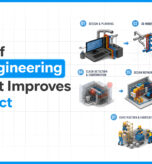


In the architecture, engineering and construction industry, reality capture is really important. It helps us get information about what is already there. We used to do this by hand, which took time and was often wrong. Now we have reality capture technology to help us.
The Core Purpose: Bridging the Physical and Digital Worlds
The main reason we use reality capture in the architecture, engineering and construction industry is to make digital copies of the real world. It bridges the gap between what exists on-site and the digital models used for design and construction. As David Mueller, VDC Manager at Stellar, explains: “Being able to take the real world and digitise it essentially increases the speed that we can design, and increases the accuracy of what we’re designing to”.
Reality capture uses tools like laser scanners, drones and cameras that can see all around to get very precise information about a building or site. This information is used to make detailed 3D models that we can use to design and manage projects.
Why is This Important?
The old ways of doing things were not very good. They took a lot of time. Were often not accurate. This led to mistakes and extra work. Sometimes we would use drawings or files that were not correct, which would cause problems.
Reality capture overcomes these limitations. It provides a permanent, measurable, and shareable 3D archive of existing conditions. This creates a “single source of truth” that all project stakeholders can rely on.
The Purpose in Action: Key Applications
The primary purpose translates into several key applications across the project lifecycle:
- Accurate As-Built Documentation: Reality capture helps us make precise records of what is already there. This is very important when we are fixing up or adding to a building because it helps us make decisions. Companies like Camellia Buildtech are experts at taking the information we get from reality capture and turning it into 3D models that we can use for our projects.
- Enhanced Collaboration and Coordination: When we use reality capture, all the teams working on a project can see the information and work together more easily. This helps us avoid mistakes and extra work.
- Clash Detection and Risk Mitigation: Reality capture helps us find problems before they happen. We can use it to see if a new part of a building will fit with the existing part, which helps us avoid costly mistakes.
- Progress Monitoring and Quality Control: Reality capture also helps us make sure that the work is being done correctly. We can use it to check that everything is being built according to plan, which gives us confidence that the final product will be what we wanted.
- Foundation for Facility Management: The information we get from reality capture is still useful after the project is finished. It helps us take care of the building and make any repairs, and it gives us a record of what is behind the walls.
The Bottom Line
Reality capture is not a tool; it is a very important part of how we do projects in the architecture, engineering and construction industry. Its main purpose is to make sure that everyone working on a project has accurate information. This helps us work together better, avoid mistakes, and make the project go smoothly.
Reality capture is changing the way we design, build and take care of our buildings.
Frequently Asked Questions (FAQs)
1. What is the difference between reality capture and a simple 3D model?
We can use reality capture to make a model of a building, where all the points are turned into intelligent objects like walls and doors.
2. What technologies are commonly used for reality capture?
Some common technologies used in reality capture include laser scanners, cameras and drones. These can be used on the ground or in the air.
3. How does reality capture improve project efficiency?
Reality capture makes things more efficient by giving us accurate information right away. It helps us find problems early and avoid rework. It also helps all the teams working on a project to see the information and work together.
4. Is reality capture only useful for large projects?
While it is especially valuable for complex projects, reality capture is scalable and can benefit projects of all sizes. Affordable solutions like the Matterport Pro3 make it accessible for smaller projects where fast documentation is needed.
5. How does reality capture help with building renovation?
When we are fixing up a building, reality capture gives us an accurate digital copy of what is already there. This is often different from the drawings. It helps architects and engineers design parts with confidence because they know they will fit correctly.