
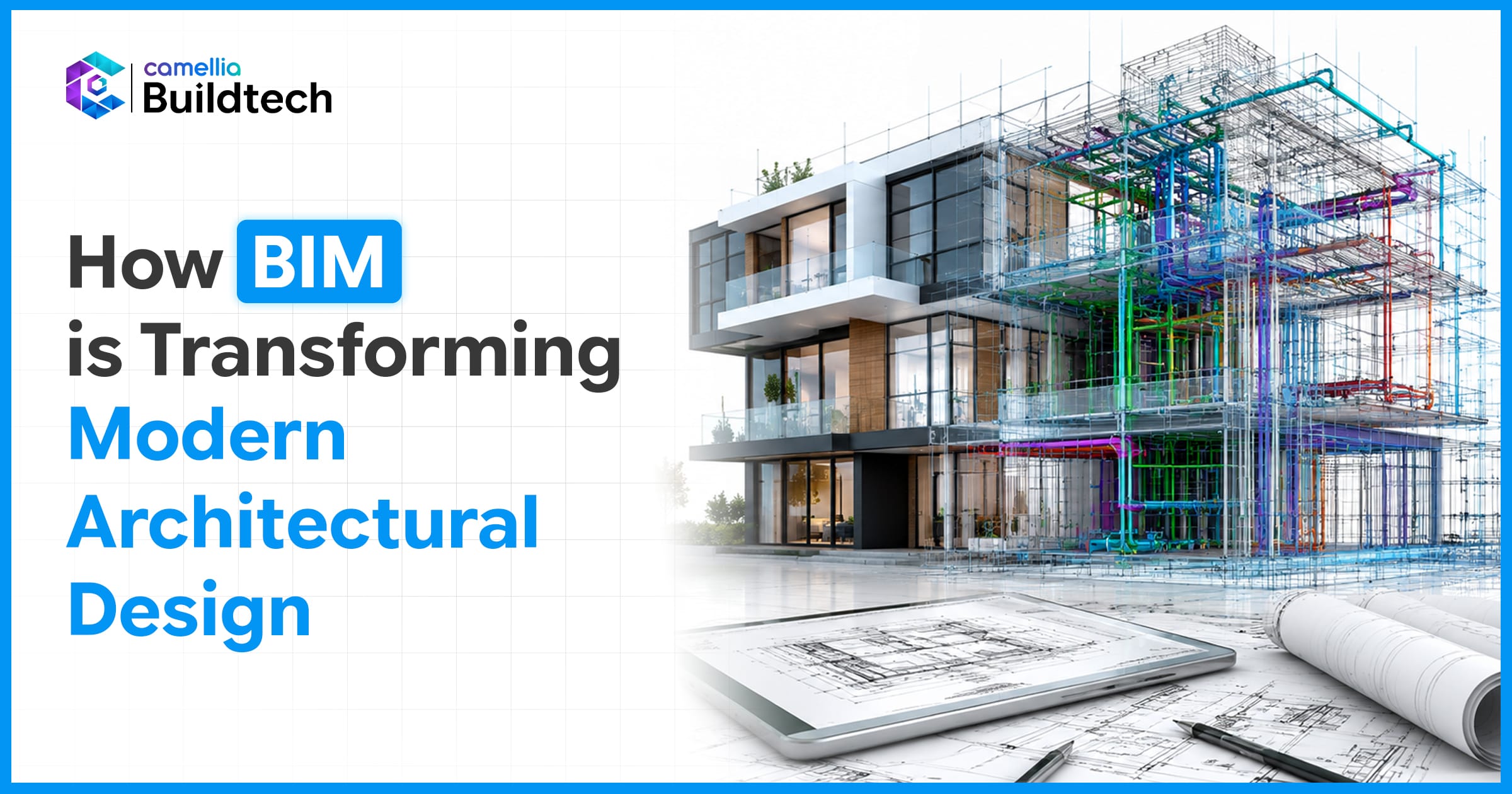

Building Information Modeling, or BIM, is changing the architecture, engineering, and construction industry. Building Information Modeling is leading this change. Once BIM was used for modeling purposes; today, however, it is an indispensable tool in the design process, coordination of buildings, and delivery of buildings. The importance of knowledge about BIM for architects is beyond discussion and cannot be ignored anymore. Building Information Modeling is crucial for architects to stay competitive.
From Drawings to Data
In the past, architects used to create 2D drawings with the help of Computer-Aided Design software. The Computer-Aided Design software was better than drawing by hand. It had some problems. When architects made changes to one drawing, they had to update all the drawings, which led to mistakes and inconsistencies. Architects, structural engineers, and mechanical, electrical, and Plumbing consultants did not always communicate well.
The Building Information Modeling changes all this. The architect creates a 3D model with a great deal of information on each item of the building. In case anything is changed, for example, a wall moves or a window gets bigger, the model gets updated by itself; thus, there is a possibility of avoiding any inconsistencies or mistakes.
Real Impact on Project Outcomes
The benefits of using Building Information Modeling are real. The studies show that the projects developed by means of BIM are completed much quicker and require fewer funds than the projects done without it. According to the research results, implementation of BIM can result in a decrease of project duration by 20 percent, a reduction of costs by 15 percent, a decrease of design errors by 30 percent, and a decrease of Requests for Information by 25 percent. There was also a study, which showed that a combination of BIM and product lifecycle management resulted in an increase of efficiency by 38 percent.
This happens due to closer cooperation between architects, engineers, and consultants.
BIM and Sustainability
Sustainability is crucial in architecture, and Building Information Modeling is a technology that aids in making buildings environmentally friendly. Building Information Modeling is useful for energy efficiency, cost-saving, and carbon footprint minimization.
With the Building Information Modeling technology, architects can estimate energy needs, sunlight penetration, and air ventilation of a building. Building Information Modeling enables designers to select materials and assess the amount of daylight a building requires. Building Information Modeling assists architects in their decision-making.
Generative. The Future of Design
The integration of BIM with AI and machine learning is exciting. Technologies drive the revolution in how projects are implemented. Generative design with the use of AI can generate design variations autonomously according to certain criteria.
Machine learning algorithms estimate the performance of buildings, detect clashes, and inform decisions at an early stage. Predictive analytics enables forecasting of energy consumption and structural performance.
Why a Solid Foundation Still Matters
Building Information Modeling is as good as the data used in it. One of the problems is low-quality data in CAD drawings, causing the creation of models. A brilliant design can still fail if the shop drawings are unreadable or if the foundational CAD data is cluttered.
For architects, this highlights a point: BIM does not replace careful, precise drafting. Instead, it makes precision more critical. The clarity and accuracy of 2D documentation still determine how well a design translates to the construction site.
Building the Future
The construction industry is always. The Building Information Modeling is at the center of that change. Building Information Modeling helps architects and engineers work together better, makes design easier, and opens up possibilities with artificial intelligence. Companies that use these tools are building the future of architecture one Building Information Modeling model at a time.
Camellia Buildtech is a company that assists architecture, engineering, and construction companies globally in providing accurate Building Information Modeling and Computer-Aided Design services. Camellia Buildtech assists architects, engineers, and constructors in simplifying their work through digital documents.