
Mechanical, Electrical, and Plumbing or Mechanical, Electrical, and Plumbing systems are those systems that ensure proper functioning, comfort, and safety of a building in construction works. Cost estimation for MEP is the process of calculating all expenses associated with the design, installation, and maintenance of these systems.
What is MEP Cost Estimation?
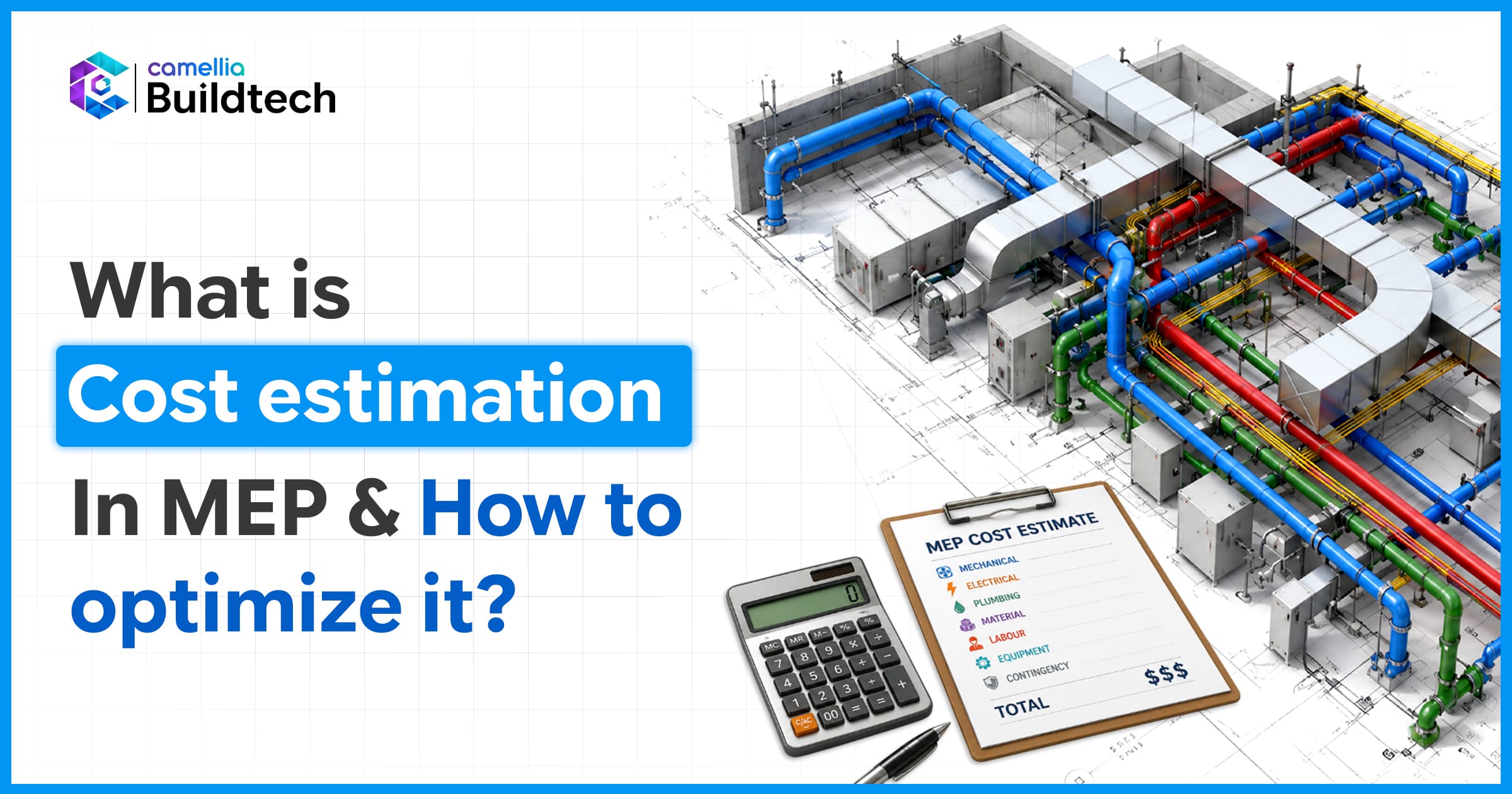
MEP estimating is more than just adding up material costs. It’s a structured evaluation of materials, labor, design coordination, and installation sequencing. For that, people use drawings and specifications of projects to estimate the amount of material needed for Mechanical, Electrical, and Plumbing, the amount of labor for Mechanical, Electrical, and Plumbing, the cost of equipment for Mechanical, Electrical, and Plumbing, and other costs associated with Mechanical, Electrical, and Plumbing.
The process typically follows these steps:
- Reviewing Project Documentation: Estimators study drawings, mechanical and electrical drawings to see what is required.
- Quantity Takeoff: It implies measuring and writing down all required components, for example, the length of wire or the quantity of ductwork pieces of the heating and cooling system.item based on what suppliers charge, market conditions, and where the project is located.
- Labor Cost Estimation: Labor is one o
- Material Cost Calculation: A cost is assigned to each material
- f the critical and complex parts calculated using how long it takes to install each unit and the crew’s composition.
- Coordination: That is one of the ignored aspects where heating and cooling ducts, electrical conduits, and plumbing lines need to be coordinated to prevent clashes.
How to Optimize MEP Cost Estimation
The Challenge of MEP Estimating
MEP estimation is inherently complex. However, systems may overlap physically; a lack of good coordination may cause clashes during construction. Also, estimates may vary greatly from reality. Some estimators add a blanket percentage to the overall price, while others miss the true costs of MEP systems, leading to figures that are completely off.
The good news is that technology and structured processes are making MEP estimates more accurate and reliable. Here are three key ways to optimize the process:
1. Use Technology to Automate Repetitive Tasks
Those days when estimators used only spreadsheets manually or even pen and paper have gone. Manual takeoff and data entry are the biggest drains on an estimator’s time. A unified takeoff and estimating solution automates this “grunt work,” eliminating duplicate data entry. By using a shared library for frequent assemblies, teams can shave valuable time off each estimate. This isn’t about replacing human expertise, but about freeing estimators to focus on the technical nuances of a project instead of repetitive data entry.
2. Create a Consistent and Scalable Bid Framework
Inconsistency is the enemy of efficiency. When every estimator follows their own “system,” it creates bottlenecks and increases risk. Having a central repository of proven item configurations and assemblies allows estimators to pull in verified data instantly. A uniform bid structure, from item coding to document formatting, also builds trust with clients and makes you easier to work with.
3. Reference Up-to-Date Material and Labor Cost Data
In a volatile market, using last year’s prices is a recipe for shrinking margins. Accessing an integrated pricing database that provides live updates on labor rates and material costs ensures your bids reflect the real-world market. A lot of companies are now using tools that give them instant access to updated pricing information from wholesalers, which means they do not have to make time-consuming phone calls to track costs for Mechanical, Electrical, and Plumbing.
The Role of Partners
Because Mechanical, Electrical, and Plumbing can be very complex, many companies work with partners to make sure their estimates for Mechanical, Electrical, and Plumbing are accurate. For example, Camellia Buildtech knows that a precise estimate for Mechanical, Electrical, and Plumbing is only as good as the data behind the Mechanical, Electrical, and Plumbing estimate. They help AEC firms clean up their CAD data and ensure MEP systems are modeled clearly and precisely, contributing directly to more reliable project cost planning. By integrating MEP disciplines into a framework, they help clients avoid the coordination problems that often cause budgets and schedules to go off track. MEP systems are crucial to a project’s success. MEP estimation requires planning. MEP partners, like Camellia Buildtech, can help.